Independence Foundation's New Strategic Direction
Independence Foundation's strategic direction shifts resources toward systemic justice and root-cause solutions to create lasting change in Greater Philadelphia.


Our New Strategic Direction
Our Evolving Purpose
Since 1932, Independence Foundation has helped Greater Philadelphia be a more equitable, healthy, and vibrant region. For years, we funded essential services like healthcare, legal aid, food access, housing, arts, and reentry programs. This work is vital, and we have been proud to support it. Over the years, we have evolved to meet new community needs. Now, we are evolving again. We also learned something important from listening to our partners: direct services alone cannot create lasting change.
The challenges in our region are different, so too must be our approach.
Our Belief
Communities know what they need. Our job is to listen, trust, and support. Trust-based philanthropy has been our approach for decades, and it will not change. What is changing is where we put our resources. We are shifting those resources to work that challenges the root causes of inequity, not just the results.

The Challenge
Inequities continue because the systems behind them stay the same. Policies, laws, and power structures uphold harmful conditions. Our new strategy lets us partner with organizations that are doing the work to interrogate, interrupt and reimagine those systems.
Our Framework: Justice as the Throughline
Justice is more than fairness. It means that systems are accountable to communities, everyone has a chance to succeed, and rights are protected. It requires looking at the policies and power dynamics that decide who benefits and who gets left behind.
We see justice as the link between personal struggles and system-wide change. When we understand how daily unfairness comes from broken systems, we can fix the roots, not just the symptoms.
For Independence Foundation, justice is the thread that holds our work together. It connects our grants, leadership training, and collaboration with others. Our goal is simple: fair, healthy, and strong communities across Philadelphia.
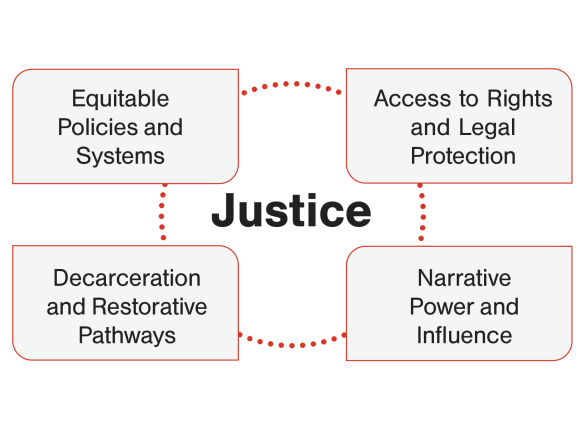
Grounded in this understanding of justice, we are focusing on four connected areas. We do not see these areas as separate. Rather, they are different ways to reach the same goal: a region where systems do not cause harm, rights are protected, and everyone can thrive.
Our four strategic focus areas are:
- Equitable Policies and Systems: We will support coalitions and membership organizations that advocate for policy change to expand opportunity and break down barriers.
- Access to Rights and Legal Protections: We will fund legal aid and rights-based work that help people navigate unjust systems and claim their rights.
- Decarceration and Restorative Pathways: We will invest in programs that offer alternatives to prison, help people reenter society, and focus on healing and restorative justice.
- Narrative Power and Influence: We will support arts, culture, media, journalism and storytelling that center the voices of communities most affected by inequity, because whose stories get told shapes which change is possible.
How We'll Work
- Grantmaking: Our approach to grantmaking remains rooted in trust and relationships. We will continue providing multi-year, unrestricted general operating support because we believe our partners know best how to use their resources. What is changing is our focus: we will concentrate our funding among a smaller group of partners, allowing for deeper relationships and investment and greater impact.
- Partner Collaboration and Support: We will continue to invest in relationship-centered learning to strengthen organizational health through cohort programs, peer-led experiences, and content-focused series. We will also engage more deeply in collaborative grantmaking with other funders to align resources, share risk, and increase impact. We are committed to strengthening connections between internal and external partners, so knowledge and resources flow freely.
- Individual Development and Wellness: Systemic change needs strong, sustained leadership. We know that the people doing this work face burnout, stress, and emotional tolls. We will continue to support individual well-being through leadership development, wellness resources, and opportunities for reflection and renewal. When leaders are supported, organizations are stronger, and communities benefit.
What This Means for Grantees
We know change can be unsettling. That's why we're committed to a gradual, transparent two-year transition.
This two-year period gives current grantees time to adjust. We will communicate openly about timelines, eligibility, and new opportunities as they develop.
Why This Matters
The challenges in our region are connected. Housing instability, food insecurity, lack of legal help, mass incarceration, and erased community stories are not separate problems. They are symptoms of the same broken systems. By focusing on the root causes, we can create change that lasts.
Our Invitation
We cannot do this alone. We invite our grantee partners, other funders, and community leaders to join us. Let’s build a future where every Philadelphian has what they need to thrive. We will continue to listen, learn, and adapt alongside our partners. This is what trust-based philanthropy looks like in practice.

Sign up for our email list
Subscribe to our email list to receive occasional updates about our new strategic direction.
Frequently Asked Questions
Q: Why is Independence Foundation making these changes?
A: For decades, we have funded organizations doing essential work across healthcare, legal aid, arts, human services, and reentry. We've seen the difference that direct services make in people's lives, every single day. We have also seen that the same needs keep recurring because the systems behind them stay the same.
Our new strategic plan reflects a simple belief: lasting change requires addressing root causes, not just symptoms. We are evolving to support work that challenges the policies, practices, and power structures that create and maintain inequity in the first place.
Q: How are the Foundation's funding priorities evolving?
A: Our commitment to advancing justice guides our work. Many of the issues we have supported historically continue to inform our strategy, while our new focus areas reflect an evolution in how we seek to create change. We are placing greater emphasis on approaches that address the policies, systems, and narratives that shape people’s lives.
Q: What does "justice" mean in this new framework?
A: To us, justice means more than fairness. It means that systems are accountable, that people have what they need to thrive, that rights are protected, and that communities have real influence over the decisions that shape them. Justice is the thread that connects everything we fund. Without justice, no amount of services can create lasting change.
Q: What are the four focus areas?
A: We'll be concentrating our resources in four interconnected areas:
- Equitable Policies and Systems: Supporting coalitions, alliances, networks, and membership organizations that advocate for policies that expand opportunity and dismantle structural barriers.
- Access to Rights and Legal Protections: Funding legal aid and rights-based work that helps people navigate and challenge unjust systems.
- Decarceration and Restorative Pathways: Supporting reentry, diversion, and restorative justice programs that offer alternatives to incarceration and help people rebuild their lives.
- Narrative Power and Influence: Supporting arts, culture, media, journalism and storytelling that elevate the voices and experiences of communities most affected by inequitable systems and shape public understanding.
Q: I'm a current grantee. What does this mean for my funding?
A: We are committed to a gradual, transparent transition.
Current grantees are receiving an extension for their general operating grant covering the 2026–2027 grant period, and will receive an additional extension grant in 2027 for the July 2027–June 2028 period. This two-year runway is designed to give you time and space to plan.
We will share more information about eligibility criteria and the application process as they are developed.
Q: Will the foundation still provide general operating support?
A: Yes. We remain committed to multi-year, unrestricted funding. General operating support is still our primary approach. We trust our partners to know best how to use resources. What is changing is what we fund, not how we fund it.
Q: Will you be funding fewer organizations?
A: Yes. We will be concentrating our resources among a smaller group of partners, which allows us to provide deeper, more sustained support. We believe this will lead to stronger relationships and greater long-term impact.
Q: How were these decisions made?
A: A: Over the past two years, our president and CEO Reggie Shuford conducted a listening tour with grantee partners, peer funders, and community leaders. The strategic plan is our response to what we heard about the challenges you face, the gaps you see, the kind of partnership you need from funders, and the leadership you feel is needed in the region and in the philanthropy space. This plan was shaped by interviews with our board, staff, and community, and a thorough review of the foundation's history and impact.
Q: When will the new grantmaking process begin?
A: The framework will be implemented gradually over the next two years. We will be communicating timelines for new funding opportunities, eligibility criteria, and application processes as they are developed.
Q: How can I stay informed?
A: We will share updates through email, our website, and direct communications with current grantees. You can always reach out to us by email at communications@independencefoundation.org.
What is Trust-Based Philanthropy?
Trust-based philanthropy is an approach that reimagines the relationship between funders and the organizations they support. At its core, it's simple: It asks the question, “What does our trusted partner need?” So, instead of imposing rigid requirements, reporting burdens, and restricted funding, foundations trust that grantees know what their communities need and how to use resources effectively. This trust is grounded in relationships, long-term partnerships, responsiveness, and respect for grantee experience.
Independence Foundation has been committed to trust-based philanthropy for decades. It shapes every aspect of our work.
What Trust-Based Philanthropy Looks Like in Practice
- Responsiveness and respect for grantee expertise. You're the expert on your community and your work. Our role is to support you, not to direct you. We believe that those closest to the problems are closest to the solutions.
- Multi-year, unrestricted funding. This means you have the flexibility to use resources where they're needed most — whether that's staff salaries, program expansion, organizational capacity, or responding to unexpected challenges.
- Long-term partnership with grantees. We're committed to our grantees beyond the grant cycle. We stay in touch, we listen, and we adapt our support as your needs evolve.
- Reduced administrative burden. We don't require lengthy reports or complex applications that pull time and energy away from your mission. We trust that you're doing important work and that you'll share what's meaningful.
Why It Matters
Traditional philanthropy often operates from a place of control—foundations decide exactly how money should be used, require detailed reporting, and fund short-term projects rather than long-term capacity. This approach can leave organizations constantly chasing funding rather than doing their best work.
Trust-based philanthropy flips that dynamic. It recognizes that:
- Nonprofits know their communities better than funders do.
- Strong organizations, not just strong programs, create lasting impact.
- Flexibility allows grantees to respond to changing circumstances and emerging needs.
- Administrative burdens disproportionately harm smaller organizations and the communities they serve.
Independence Foundation’s Commitment to Trust-Based Philanthropy
As Independence Foundation evolves its strategic focus, our commitment to trust-based philanthropy remains constant. We will continue to provide multi-year, unrestricted support. We will continue to build long-term relationships with our partners. We will continue to trust that you know best how to use the resources you receive.
Our justice framework may be new, but our approach to partnership stays rooted in the trust and respect that have defined our work for decades.
Learn More
To explore trust-based philanthropy further, we recommend the Trust-Based Philanthropy Project, a hub of resources, research, and practices from across the field.